

With contributions from Cirencester Archaeological & Historical Society, Cirencester Civic Society, members & friends
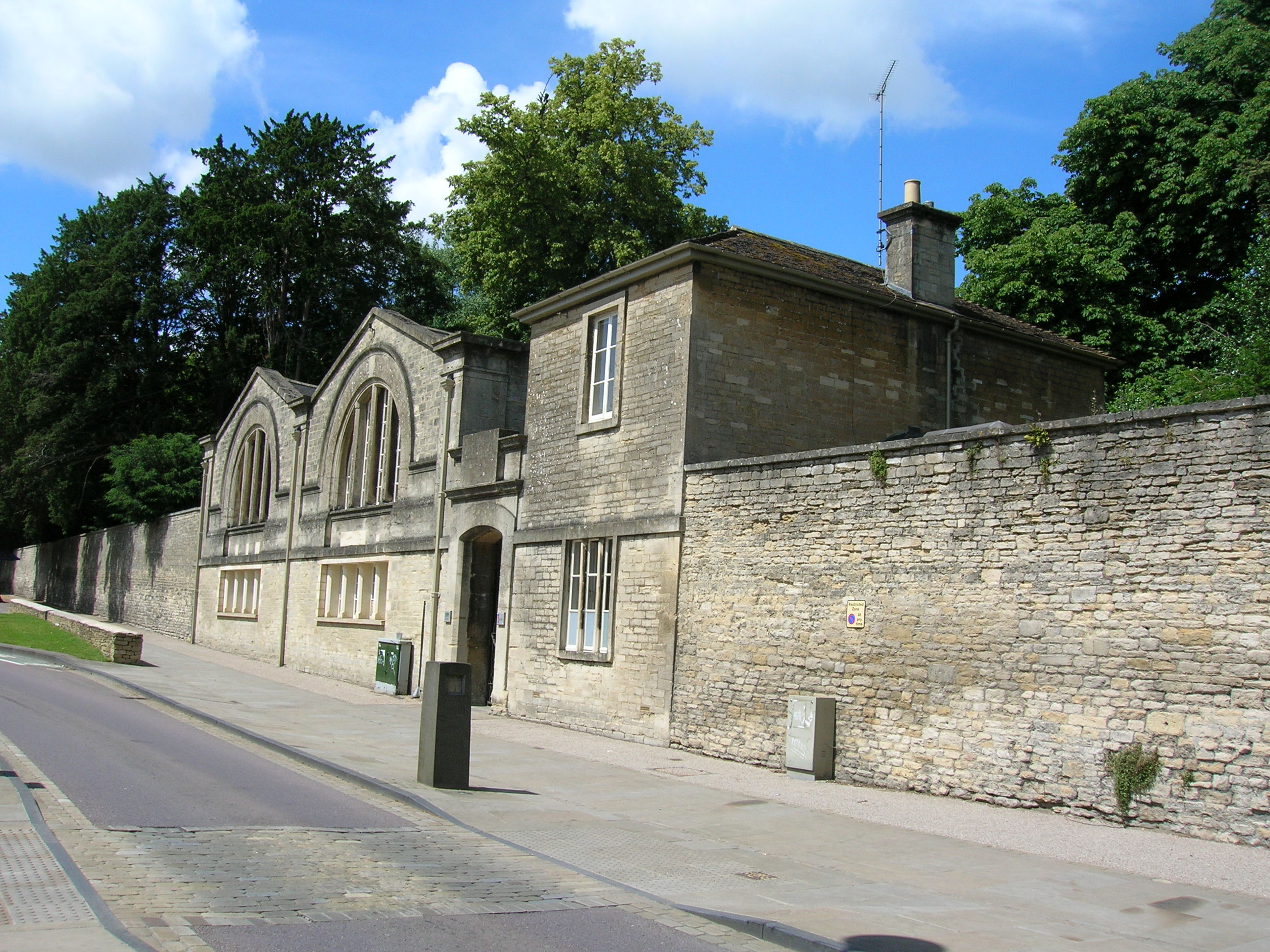
Image above: The Museum building, still a feature in Tetbury Road today.
The Illustrated London News of 08 September 1849, below a headline about a Riot in Montreal, called for attention … “to the fact that discoveries of Roman remains of the most interesting description had been made at Cirencester during the excavation of a drain … and that, owing to the praise-worthy public spirit of Earl Bathurst, zealously seconded by the Town Commissioners and the inhabitants in general, great efforts had been made to preserve entire the beautiful tessellated pavement which had thus unexpectedly been brought to light.”

There followed almost six years between the mosaics being discovered in Dyer Street and the proposed new Corinium Museum opening in 1856. However, this was not the first museum in Cirencester. In 1835 the town had set up a Permanent Library and Reading Rooms in Dyer Street which by the next year had added a museum.
This housed objects donated by Edward Bowly, taxidermied birds including a stuffed wild swan with a wing span of over seven feet, alongside an ancient tapestried chair. Could this be where the mosaics were first displayed, if indeed they were?
It is likely that this Dyer Street museum also contained some of the Roman stone work found in preceding years. This I deduce from a reference in an AGM report from 22 December 1855 where Mr Brown proposed that the Roman monumental stone and other Roman antiquities at the library be transferred to ‘Earl Bathurst’s Building’, provided this would be acceptable to his Lordship.
What, then, delayed the building of the Corinium Museum? Plans were certainly afoot. The building would be erected opposite the relatively recently opened GWR station on the site of the Barley Mow in Tetbury Road. In June 1852 Mr Thomas Bridges of Cirencester sent Lord Bathurst the ‘Specifications of the works to be done in erecting and building a museum, keepers house and park entrance at Cirencester’. A month later he supplied an estimate based on drawings supplied by an architect called Mr Parish. He quoted £586 (equivalent today of £46,989). Building seems to have begun that same year but then stalled.
The problem initially looks like an increase in costs and his Lordship’s reluctance to pay above the estimate. In May 1853, Mr Anderson (Lord Bathurst’s representative) wrote to Bridges to check whether he really was ‘entitled’ to more than the estimate. Clearly Mr Bridges did not get satisfaction as in June he took “the liberty of addressing your lordship respecting the building of the museum” regarding the estimate. He had quoted “at the lowest figure possible with the intention of getting the work to have employment for my men.”

Then we come to the possible reason why there was a delay in the museum construction. “Mr Parish had added many other particulars and details which weren’t on the first plan and Mr Bridges should be a great loser if the works had gone on.” Further the plans had been taken away by the architect and not returned, “which prevented me from proceeding with the building and the object I have in view of getting employment for my men was therefore defeated. I wrote two letters to Mr Parish …to lend the plans that I might go on with the work but received no reply from him. I waited in the expectation of hearing from Mr Parish.”
He goes on to assure his Lordship that this delay meant that the difference in the price of labour and materials this year put the estimate up to £800 (today £64,148). From my researches so far, I have not come across anything that confirms whether Mr Bridges completed the building or whether his lordship went with Mr Rollins who had apparently given a lower quote.
Either way, the Corinium Museum of Roman Antiquities opened its doors on 5 August 1856 and served the town and its visitors well until the next chapter in the museum’s life was unveiled in 1938 in its present (and now much expanded) location in Park Street. But that as they say is another story; meanwhile the museum is always well worth a visit.
Dr Caroline Morris, Corinium Museum
Support Cirencester’s principal heritage societies and their event programmes: Archaeological & Historical Society (www.cirenhistory.org.uk) and Civic Society (www.cirencestercivicsociety.org.uk), which runs a programme of Town Walks in the season plus pre-booked for small groups. Please contact Rob Tuttle townwalks@cirencestercivicsociety.org.uk 07771-998182
To keep up to date with what´s going on in town, feel free to join our Facebook group by clicking here. To advertise with the magazine check out the Rates & Media Pack – Ciren Scene!
Pingback: CAHS Snapshots of Local History 2026 – Ciren Scene