

Once upon a time English villages had a parish church, a pub, a policeman and a shop (which also housed the local post office). Round about 1995 the internet began to change all this. Just thirty years later, supermarkets deliver groceries ordered online by villagers whose use of post office services has diminished due to the use of mobile ‘phones and emails as the growth of rural fibre broadband has enabled residents to become virtual recluses, having almost no face-to-face relationships locally, often imagining they have thousands of social media ‘friends’ globally.
Policing has also changed. The use of online crime reporting, and the closure of small police stations and police houses means the character of Harrison – the policeman in The Archers; the BBC Radio ‘tale of everyday countryfolk’ – is as imaginary as the pot of gold at the rainbow’s end.
The number of local village pubs that survive is a perpetually shrinking figure. Those which remain often rely on ‘gastropub’ diners travelling from towns and cities to replace local residents, who stay at home consuming supplies brought to their doors by supermarkets.
Just as so many pubs are now private houses, formerly residential properties that housed local people are becoming weekend retreats and non-residents’ ‘Airbnb’ investments, churches and chapels are falling into disuse as congregations continue to shrink. It’s estimated that since 2013, over 3,500 rural churches of The Church of England have been deconsecrated. However, claims have been made that young people aged between 15 and 30 are showing reviving interest in practising religious ceremonies, although it’s not clear whether this offers any hope for forgotten rural churches.
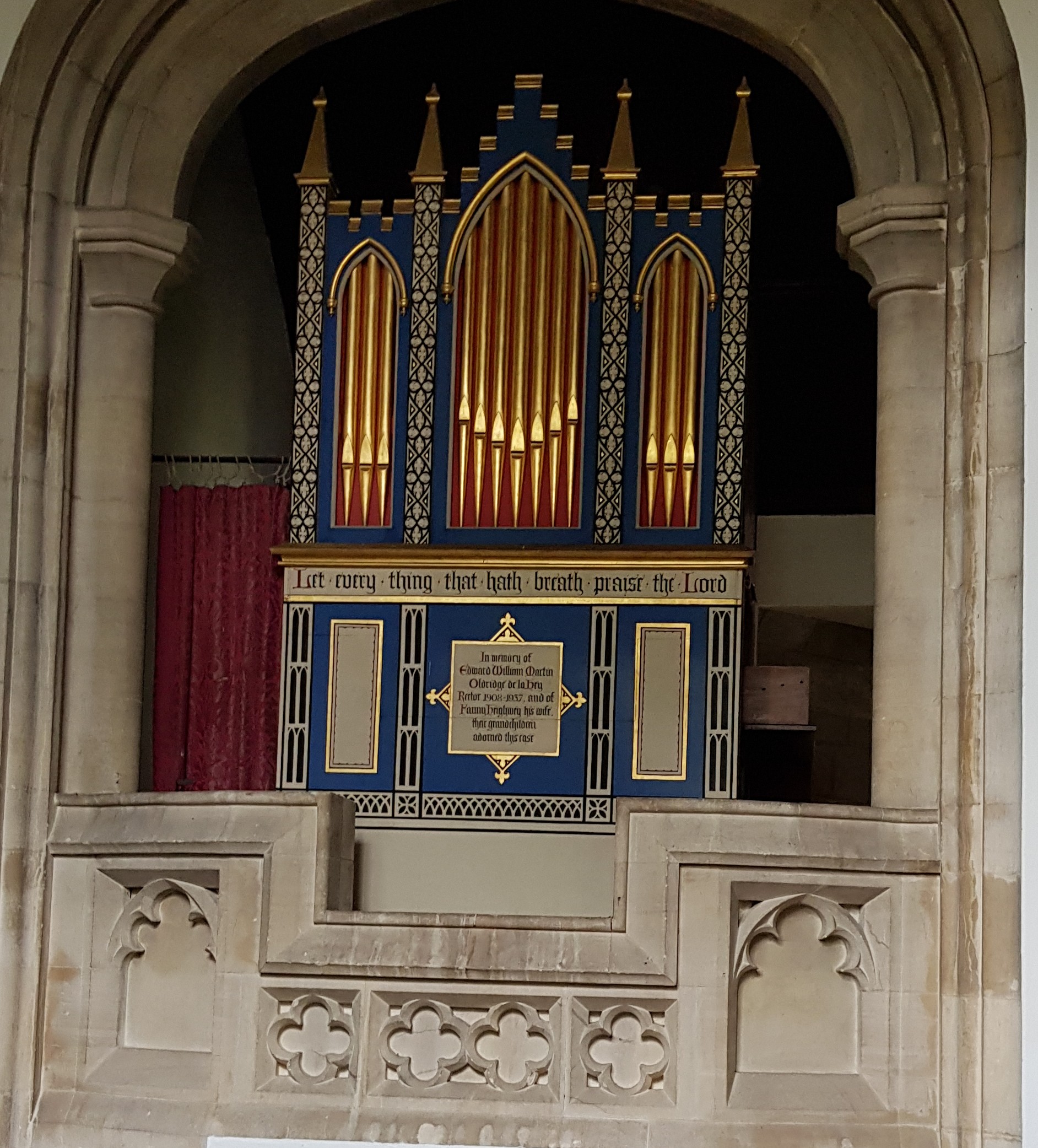
Where churches close, it’s worth considering what’s left when they become disused. In many small churches one feature that often remains is a pipe organ. They’re part of the building, and – being built-in – unlike a movable piece of furniture.
Pipe organs didn’t become part of Church of England buildings until the mid-eighteenth century. They were installed as a desirable item throughout the years until electronic organs and digital instruments became a less expensive and more portable option in the second half of the twentieth century. From the latter part of the nineteenth century many small churches with insufficient space or funds to build in a pipe organ chose reed organs or Harmoniums. The key difference is that in the case of a pipe organ, the building itself forms part of the characteristics of the sound. Of course, organs have occupied our parish churches for less than four centuries. Originally singing in churches would have been ‘a capella’ plainsong and unaccompanied, but some churches still have western galleries where village musicians playing stringed and wind instruments once supported congregational singing, from the Reformation and the founding of the Church of England until the interruption of the Civil War and Puritanism opposed showy décor and harmonic music, even leading to destruction of many western galleries. Instruments such as the Sackbut – a primitive trombone – and the Serpent, a weird-looking bass woodwind version of a Tuba!
Ciren Scene readers can see and hear this for themselves because an Oxford University Music graduate and Organ Scholar has created a Channel on YouTube: ‘Ben Maton – The Salisbury Organist’ on which he plays organs in small rural churches. He’s already demonstrated organs and Harmoniums in churches near Cirencester. He posts a new video almost every week. His videos form a valuable archive of our disappearing rural heritage, because he documents picturesque churches as well as playing a variety of pieces on a wide range of organs many of which may be reaching their final days.
To keep up to date with what´s going on in town, feel free to join our Facebook group by clicking here. To advertise with the magazine check out the Rates & Media Pack – Ciren Scene!
0 comments on “Country Matters by Arrowsmith Aug 25: The Village Organist”