

With contributions from Cirencester Civic Society, Cirencester Archaeological & Historical Society, members & friends
Walking through Cirencester during the 1960s, the town seemed caught in a delicate dance between its ancient Roman heritage and the rapid modernisation typical of the post-war era. To live and work in the town during this decade was to see huge and specific areas of demolition and slum clearance, with major redevelopment as the town moved away from its Victorian roots and railway dependence toward a new identity as a modern, car-oriented regional hub.
Landmarks such as Abbey House, the Gaumont Cinema in London Road and a row of shops along Dyer Street all disappeared, whilst ageing cottages in streets like Lewis Lane and Gloucester Street were demolished to make way for modern flats and housing.

Transport underwent a seismic shift during this period. By 1964 the town had lost both of its railway stations, victims to the rising popularity of the motor car. Meadow Road was built over the old GWR tracks with the planning of a proposed eastern ring road. This era also marked the end of town-centre light industry with most local production moving to Love Lane.
Watching this transformation during the summer of 1966, four gentlemen gathered in a Cirencester office, deeply alarmed by the pace of development. They resolved to ‘Wage war against bad planning and preserve what is good’. Lord Bathurst, local MP Nicholas Ridley and residents William Croome and Desmond Fitzgerald called a public meeting at the Corn Hall on 28 September to gauge local support for a town Civic Society. The turnout confirmed a general sense of concern and by November 1966 the Cirencester Civic Society was officially formed, with William Croome elected as its first chair.
Civic Societies were not a new idea, primarily emerging from ‘improvement’ or ‘amenity’ societies from the mid-to-late 19th century. Rapid Victorian industrialisation had expanded some towns by 50% within a 10-year period, causing crowded and typically unsanitary housing. The consequences were considerable and such societies demanded and achieved reforms to provide better planned urban housing alongside the protection of heritage and green amenity spaces.
The newly formed Cirencester Civic Society wasted no time in establishing its main pillars of activity – to protect, promote, educate and shape our town – which remains its core focus today.
Early heritage protection efforts saw members successfully oppose the demolition of key parts of Gosditch Street and Castle Street, and later to campaign against the sale of the Norman Arch. The Society also consulted on major developments like New Brewery Arts, the Woolmarket and Swan Yard, alongside the designation of the town’s conservation areas.

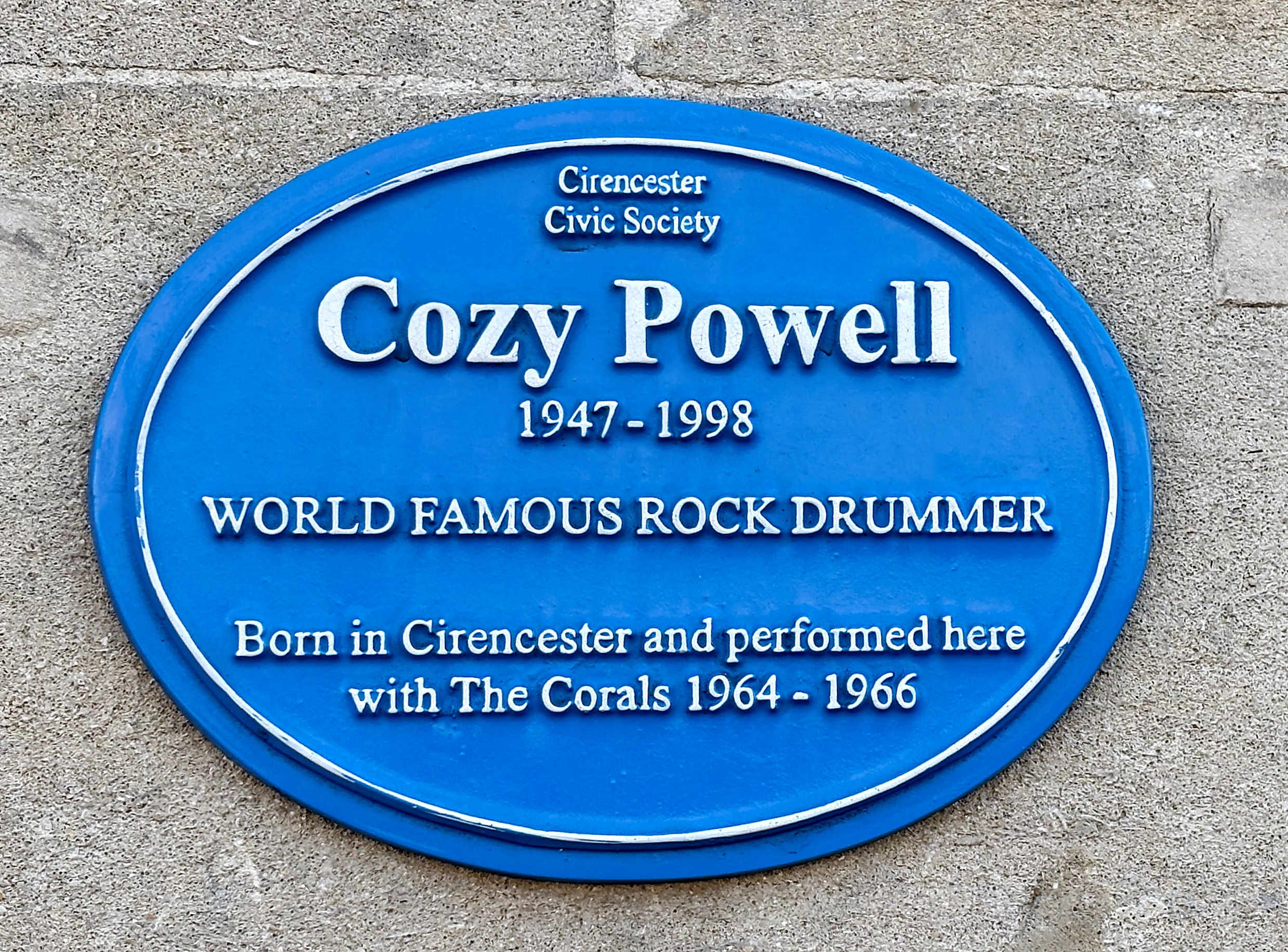
Education and promotion also flourished. A monthly talks and events programme encouraged new members, and since 1970 trained volunteers have led guided walks through the town’s historic streets, where many now spot the blue and purple plaques installed on buildings around town. There are now over 50 celebrating local architecture and notable residents, from vaccine pioneer Edward Jenner, England cricketer Charlie Barnett to legendary drummer Cozy Powell – who can forget the crowds in the Market Place in 2016 to see the unveiling of the Corn Hall plaque by his good friend Brian May.
Today, membership fees and donations from visitors joining Guided Walks help fund Civic Pride grants for local not-for-profit community groups, alongside contributions to larger major projects such as the recent renovation of the church passage linking Market Place to the parish churchyard, and ‘Project Black Jack’ which returned two statues to the Parish Church tower in 2021.
Recent Civic Society initiatives have introduced the first Civic Design Award, presented for the extensive renovation of a large historic house in Dollar Street and a Conservation Award for the sympathetic internal conversion of a former shop in Gloucester Street.
In 2025, the Society commissioned local artist Mike Smith to create a new addition to the town’s Hare Trail. Members voted to name him ‘Horace’- the English version of the Roman ‘Horatius’ which is derived from the Latin word hora, meaning ‘timekeeper’. Horace now stands proudly behind the Parish Church in West Market Place, a symbol of the past rooted in the present, looking towards the future.
This September sees the return of the Heritage Open Weekend, hosted by Cirencester Civic Society from 11-13th September where buildings usually closed to the public will open their doors to celebrate the theme of ‘everyday lives’. For details on this weekend and its programme of events, or to learn more about the Society and how to get involved, visit http://www.cirencestercivicsociety.org.uk.
Christina Ibbotson, Cirencester Civic Society
Support Cirencester’s principal heritage societies and their event programmes: Archaeological & Historical Society (www.cirenhistory.org.uk) and Civic Society (www.cirencestercivicsociety.org.uk), which runs a programme of Town Walks in the season plus pre-booked for small groups. Please contact Rob Tuttle townwalks@cirencestercivicsociety.org.uk 07771-998182
To keep up to date with what´s going on in town, feel free to join our Facebook group by clicking here. To advertise with the magazine check out the Rates & Media Pack – Ciren Scene!
0 comments on “CAHS Snapshots: Celebrating 60 Years of Cirencester´s Civic Society”