


With contributions from Cirencester Archaeological & Historical Society, Cirencester Civic Society, members & friends
Farewell to Cirencester’s Wheatsheaf Inn
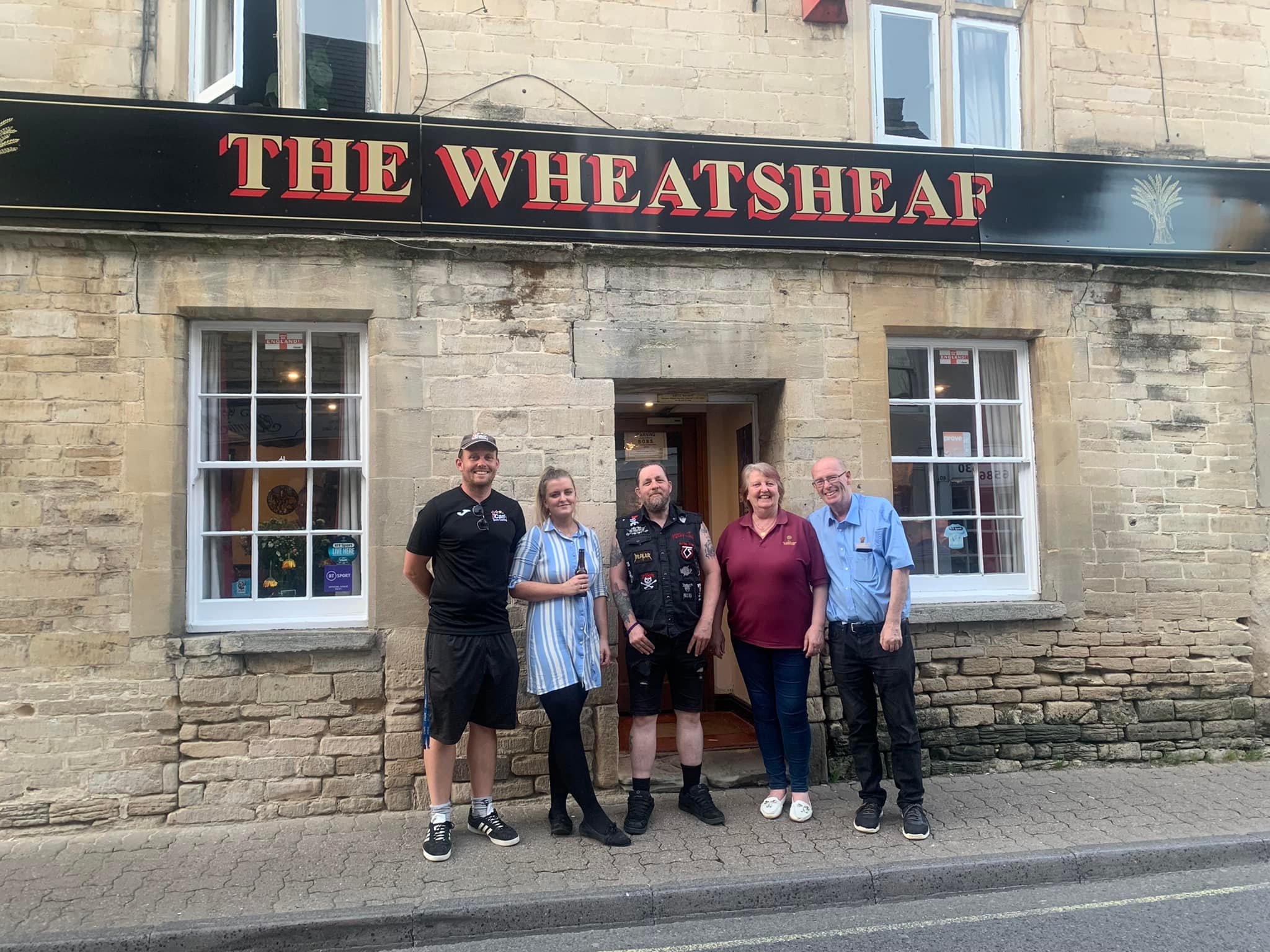
Any lingering hope that the former Wheatsheaf Inn at 79 Cricklade Street in Cirencester might be reopening as a going concern risks finally being extinguished by the current planning application to take this property down the same route as so many other Cirencester pubs, by conversion into town centre housing accommodation. It is either a welcome or a worrying and increasing trend depending on your point of view – more housing opportunities in key locations and/or the loss of a considerable heritage legacy.
The history of the Wheatsheaf shows its significance as a proper inn and focal point of activity over 200 years. The building facing the street is listed grade II in a double-pile plan, and dates from at least the 18th century, with documentary evidence from 1782 and inclusion in a listing of no less than 73 inns or taverns c.1800.
What also really matters is the large plot of open ground behind, the relic of a large inn yard, with now-scant buildings a shadow of the once busy scene of inn, brewery, various rural trades and agricultural activities. It was a true town centre yard and despite peering through the street gate today one perhaps less well appreciated than those of larger establishments in and around the Market Place.
A mortgage of 1784 lists two tenements, and a glance at the building’s street frontage still shows their front doors, long since blocked up. Within a few years it was converted and constructed on the open space behind was a ‘Brewery, Brew-house, Cellars, Stables, Lofts, Yards, Gardens, and Premises thereunto adjoining’, offered for lease ‘as complete and convenient a Country Brewery as any in the kingdom.’ It later became part of the Cripps Brewery operation in the town.

The Wheatsheaf also enjoyed the loyalty of a series of long-serving landlords or licensees, giving the place stability. In 1820 Abraham Blizzard, ‘Victualler, Cricklade Street’, was in residence. He was followed by a succession of the Berry family through to the 1870s. The 1871 Census described John Berry, born in Latton and aged 57, as the innkeeper and unmarried. He ran the inn with the assistance of his sister Elizabeth, aged 40 and also unmarried, plus a hostler, a general servant, and a labourer – a not-untypical town inn arrangement.
Others had trades to support their income. The 1911 Census shows Elijah Walter Orchard aged 47 as licensee, also advertising himself as a Hireing and General Smith. A rare trade card shows him standing with horses and workers outside the premises. The Orchards were at the Wheatsheaf for a long time, Mrs Orchard being there in 1940.
The town map of 1835 shows a cattle yard at the rear of the premises. The December 8th 1838 edition of the Gloucester Journal reported the tenth annual exhibition of the Cirencester Agricultural Association ‘held in the yard of the Wheatsheaf, Cirencester, on Thursday last and a great improvement on the show of last year’. It was also ‘pronounced to be the largest that has taken place since its establishment.’ No surprises either for reading that some eighty ‘gentlemen and agriculturists’ dined together in the afternoon at the nearby King’s Head with Earl Bathurst in the chair.

The inn yard had another function for much of the 19th century too, becoming popular as a town base and gathering yard for a number of the local carriers, usually a single horse and cart plying to and fro the villages around Cirencester. An 1894 Directory shows quite a list, each with their regular routes serving specific communities. Modern bus services represent only a shadow of that network, and no longer arranged around an inn yard.
So the Wheatsheaf’s story runs throughout the 20th century and up to recent times, until final closure in June 2024. Long-serving landlords remained a pub theme, rounding off with Dave Watson and his family clocking up very nearly thirty years in charge. Latterly it had become a leading TV sports & football venue in town, attracting good support to the bars and old skittle alley, especially for the big games.
My memory of watching a triumphant Liverpool FC sweep across the several screens in a lively Cup game remains undimmed even now. Thus community inns such as this one have served evolving public interests in a way which is very much part of their character, and a big loss once they are gone.
David & Linda Viner
With thanks to Rick Martin and in happy memory of the late Phil Griffiths, pub historians both.
See Philip Griffiths Cirencester Pubs Through Time (Amberley 2013)
Support Cirencester’s principal heritage societies and their event programmes: Archaeological & Historical Society (www.cirenhistory.org.uk) and Civic Society (www.ccsoc.org.uk), which runs a programme of Town Walks in the season plus pre-booked for small groups. See the Society’s website or phone William Cooper on 01285 88 55 90.
To keep up to date with what´s going on in town, feel free to join our Facebook group by clicking here. To advertise with the magazine check out the Rates & Media Pack – Ciren Scene!
0 comments on “CAHS Snapshots of Local History: Farewell to Cirencester’s Wheatsheaf Inn”